



Introduction — History and modern life: why Porto still preserves its trams
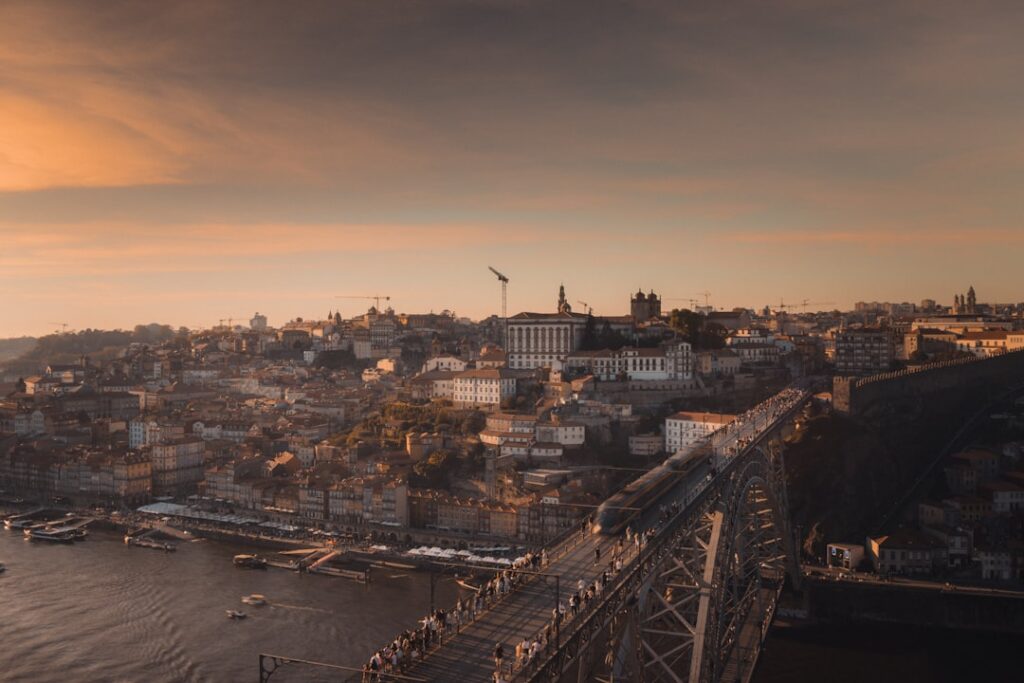
Porto is a city where geography, industry and culture collide in narrow alleys, lively Douro riverfronts and hills dotted with baroque churches. Among the symbols that tell this story, the electric trams hold a special place: small, wooden, sometimes a bit rattly, they still run here as living witnesses of the past. Far from being mere museum pieces, some of these trams still serve locals and visitors, offering a travel experience that blends utility, urban memory and picture-perfect charm.
In this in-depth guide we’ll explore why Porto has kept part of its historic tram network even as modern urban life brought metros, articulated buses and bike lanes. We’ll cover the heritage and practical reasons behind their preservation, how they fit into today’s cityscape, and how travelers can use these lines to discover the city — from the Ribeira quays to the seaside promenade of Passeio Alegre. We’ll also look at the local institutions — museums, associations and operators — that maintain these vehicles, the exact spots to see and board them, and practical tips (sample schedules, prices in euros, precise addresses) so you can plan a ride without surprises.
The tram in Porto isn’t just a photo-op: it embodies a city strategy of valuing industrial heritage and fostering thoughtful tourism. Historic trams also contribute to neighborhood identity, support local micro-economies (cafés, artisans) and give residents a slow, contemplative alternative to faster transport. We’ll describe key places like São Bento station (Praça de Almeida Garrett, 4000-069 Porto), the Ribeira district (Cais da Ribeira, 4050-513 Porto), Passeio Alegre beach (Praça do Passeio Alegre, 4150-573 Porto) and Casa da Música (Avenida da Boavista 604-610, 4149-071 Porto), explaining how to orient yourself and combine a tram ride with visits to these landmarks.
Finally, this guide is for all readers: curious travelers, heritage enthusiasts, families and tourism professionals. You’ll find immersive route descriptions, local tips — like the best times for crowd-free photos, precautions for boarding and disembarking on steep platforms, and tricks for mixing tram, metro and walking — plus up-to-date practical info on tickets and access. Get ready to step back in time in modest comfort: the squeak of wheels on rails, the waxed wood benches and the Portuguese conversations that give a gentle, old-world sweetness to a trip that Porto knows how to preserve so well.
The historical and cultural context: why Porto decided to preserve its trams
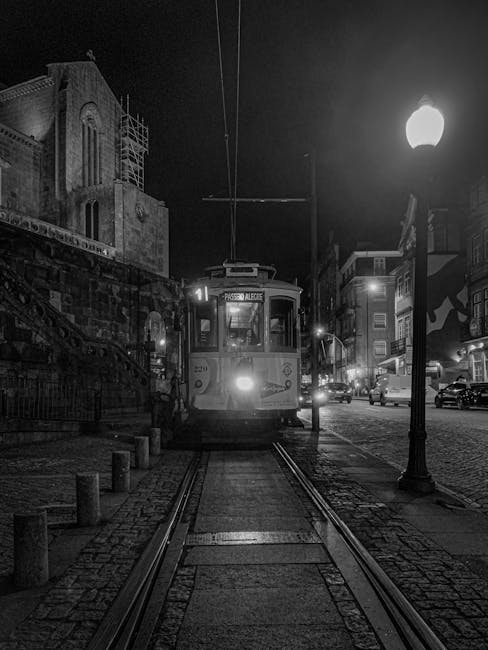
To understand why Porto kept its trams, you have to go back to the turn of the 20th century, when the city was modernizing: electric lines gradually replaced horse-drawn trams, linking the hills, the quays and the new industrial neighborhoods. These vehicles quickly became a central part of daily life in Porto. Over time, faced with competition from cars and buses, much of the network was dismantled in the 1960s and 1970s. But unlike many cities, Porto preserved iconic segments — partly for practical reasons but mainly to protect material and immaterial heritage.
Local authorities, enthusiast associations and cultural institutions played key roles. For example, user collectives and local historians campaigned to restore historic wooden-and-metal carriages. The city government integrated these initiatives into its tourism and cultural development plans, viewing the trams as attractive assets that strengthen Porto’s image without resorting to artificial recreations of the past. Preserving the trams also meant preserving skills: bench carpentry, the electrotechnics of motors and the craft of restoring bodywork were kept alive thanks to specialized workshops.
From a heritage perspective, keeping the trams fits a logic of protecting the urban landscape. The tracks that wind along the Douro and reach Foz do Douro cross classified sectors, historic squares and promenades that retain strong identity value. Trams are now part of cultural circuits that can be combined with walking tours: São Bento station (Praça de Almeida Garrett, 4000-069 Porto), Porto Cathedral (Sé do Porto, Terreiro da Sé, 4050-573 Porto), and Bolhão Market (Mercado do Bolhão, Rua Formosa 352, 4000-214 Porto).
Finally, tram presence also follows measured tourism logic: instead of being trapped in nostalgic, commercialized settings, they provide useful transport — for example the line linking the city center to the gardens of Passeio Alegre (Praça do Passeio Alegre, 4150-573 Porto) — and a sensory experience that is hard to reproduce with modern vehicles. Authorities set clear rules to avoid over-exploitation: limited runs in high season, adjusted fares, and reserved schedules for residents at certain times. This mix of heritage protection and contemporary use explains why Porto chose to keep its trams.
Lines still in service: routes, schedules and practical fares
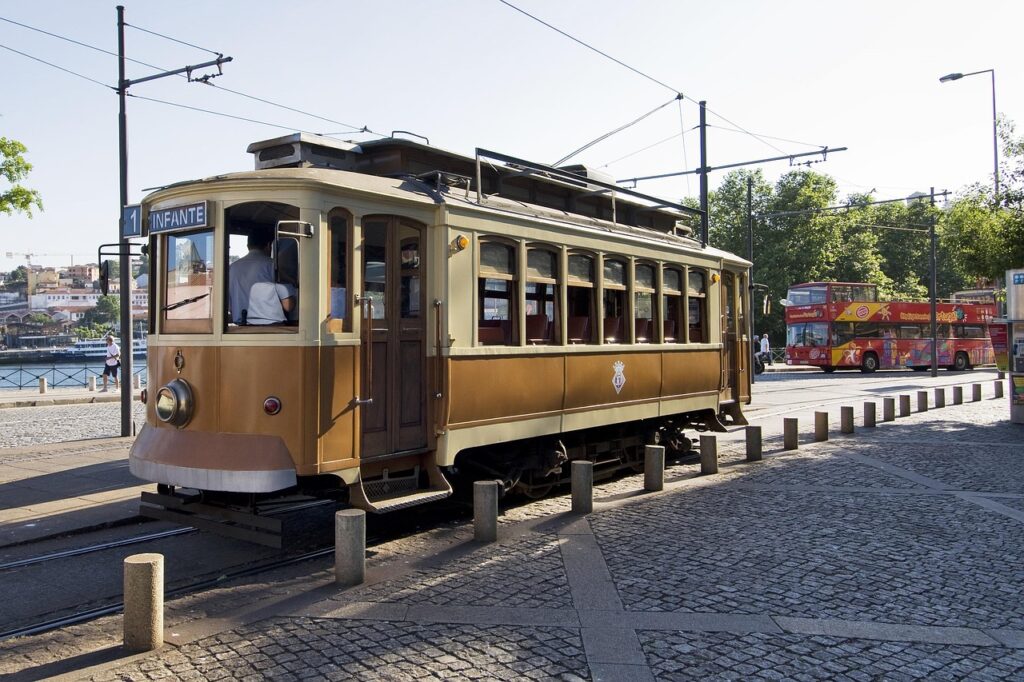
Today, Porto retains a few historic line segments used by tourists and locals. The best-known is Line 1, which links the historic center to Foz do Douro, offering a picturesque ride along the river. For practical planning:
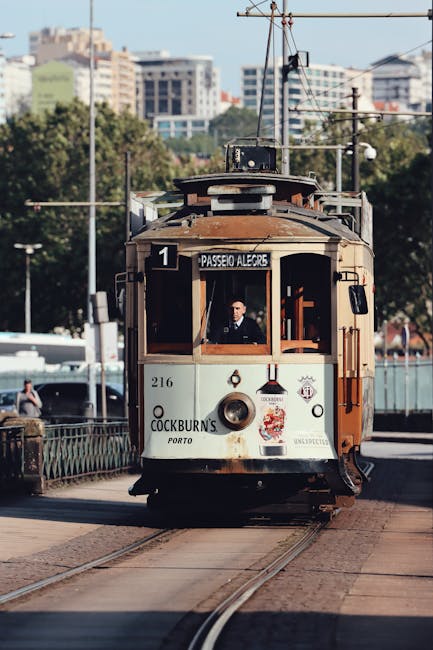
- Line 1 (Infante / Cais da Ribeira → Passeio Alegre): scenic route along the Douro, perfect for seeing the Ribeira (Cais da Ribeira, 4050-513 Porto) and ending at the beach. Typical hours: about 10:00 – 18:00 in low season, 09:00 – 20:00 in high season. Approximate price: €3.50 per trip if paid on board (tourist fare). Duration: 40–50 minutes depending on stops. Suggested departure point: Cais da Ribeira, 4050-513 Porto.
- Line 18 (historic center loop): often run on a limited schedule for circular routes around the Baixa and Sé. Typical hours: 10:00 – 16:00 (check operating days). Fare: €2.50–€3.00 depending on the route. Duration: 20–30 minutes.
- Special lines and occasional services: during festivals (São João, Christmas) or cultural events, extra trams may run. Special schedules and fares are announced by the Câmara Municipal do Porto and the local operator (STCP).
Important: Porto also uses the Andante system for metro and buses. Historic trams may accept separate payments on board or via ticket booths at some platforms. If you plan to mix tram and metro, get an Andante card (card cost: €0.60; top-ups depend on zones, e.g. one trip zone 1 = €0.80). Tourist offices, notably the Escritório de Turismo na Torre dos Clérigos (R. de São Filipe de Nery 4050-546 Porto), can provide cards and advise on combined fares.
Practical tips: arrive 15–20 minutes before departure to secure a wooden bench seat, avoid local rush hours (08:00–09:30 and 17:30–19:00) if you want photos without crowds, and bring small euro coins (€1 and €0.50) in case the driver accepts cash. For passengers with reduced mobility, check in advance: some historic cars have narrow entrances and steps. Always verify current schedules on the STCP (Sociedade de Transportes Colectivos do Porto) website or at tourist offices.
Local experiences and tips: how to ride a tram like a local
Taking the tram in Porto is more than boarding a vintage vehicle: it’s stepping into an urban ritual. Here are recommendations to get the most from the experience:
- Best time to ride: early morning (around 09:00–10:00) or late afternoon (16:00–18:00) for soft light on the Ribeira’s azulejo façades. In high season (June–September), prefer mornings to avoid the tourist crowds.
- Where to sit: wooden benches on the river side offer the best photo angles; watch your step when the tram climbs or descends — hold the handrail.
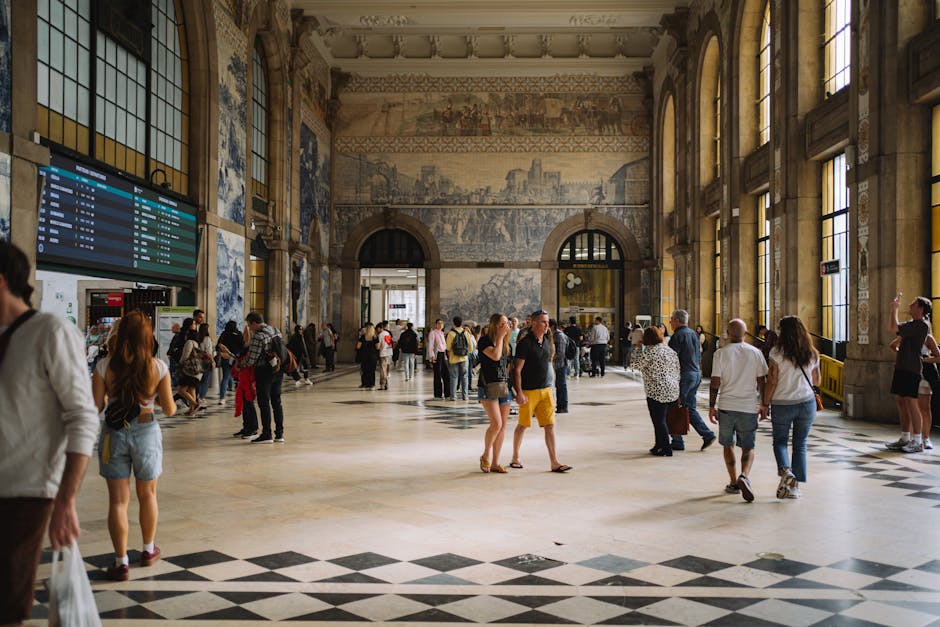
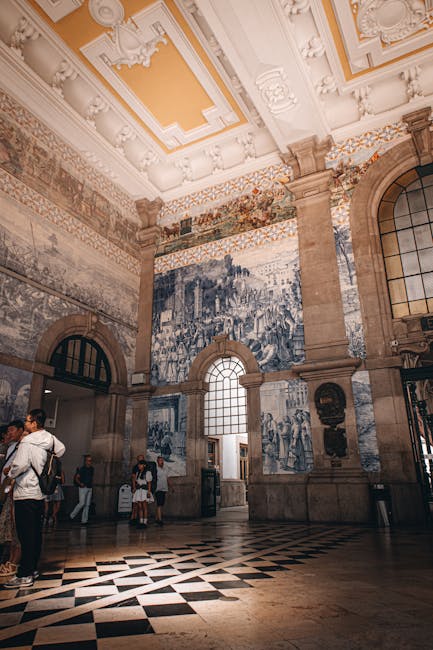
- Smart combinations: pair a tram ride with a visit to São Bento station (Praça de Almeida Garrett, 4000-069 Porto) to admire the azulejos, then get off at Cais da Ribeira (4050-513 Porto) for lunch at riverside restaurants like « Lisboa do Douro » (indicative address: Cais da Ribeira 12, 4050-513 Porto — check opening times).
- Photography: expose for the bright areas of the Douro and use a fast shutter speed to freeze motion. Wooden trams often throw warm reflections at sunset near Passeio Alegre.
- Food and breaks: once you reach Passeio Alegre (Praça do Passeio Alegre, 4150-573 Porto), stroll the gardens and enjoy the seaside cafés. Traditional snacks like the francesinha are best tried in Baixa (downtown), generally served between 12:00 and 23:00.
Above all, respect local rules: avoid eating inside trams if it’s prohibited, keep your bags close and give priority seating to elderly passengers and expectant mothers. Always ask the driver for directions when making a connection with the metro or buses: drivers are often great impromptu guides and know the best routes to avoid works or temporary detours.
Conclusion — living heritage and a city on the move
Keeping trams in Porto is a decision that goes beyond nostalgia: it’s a deliberate strategy of heritage conservation, urban planning and sustainable tourism offering. These historic vehicles let you read the city differently — taking time to traverse it rather than simply passing through. They connect generations, preserve artisanal trades and enrich the visitor experience for travelers who want to feel the memory of the rails under their feet.
On the practical side, a few key points will make your visit easier: Line 1 gives a panoramic ride between the historic center and Passeio Alegre beach (hours vary by season; tourist fares around €3.50), central circular tours focus on Baixa and Sé, and it’s wise to check on-site for exact schedules and combo offers via STCP or tourist offices like the Escritório de Turismo na Torre dos Clérigos (R. de São Filipe de Nery 4050-546 Porto).
If you visit Porto, allow at least an hour for a tram ride in late morning or late afternoon, combine it with a stroll in the Ribeira (Cais da Ribeira, 4050-513 Porto) and a stop at São Bento station (Praça de Almeida Garrett, 4000-069 Porto) for a striking contrast between historic mobility and monumental scenery. And finally, follow local recommendations — buy tickets in advance when possible, arrive early and be respectful to the vehicles and fellow passengers: it’s the best way to help keep these trams alive. For Porto, they are far more than transport: they are living fragments of a city that knows how to balance history and modern life.