




Introduction: exploring Porto via its iconic transport in a single day
Seeing Porto in one day might sound ambitious — the city unfurls across steep hills from the lively Douro waterfront to the elegant avenues of Boavista, via the medieval lanes of the Ribeira and the views from Vila Nova de Gaia. Yet the metro network, historic trams and funiculars can turn limited time into a coherent tour. Rather than treating transport as mere logistics, approach it as attractions themselves: the modern metro efficiently links the major districts, the tram moves at the pace of old façades and the river, and the funicular spares you the toughest climbs while revealing the city from a spectacular angle.
Porto has a unique geography. Its historic center, a UNESCO World Heritage site, terraces between São Bento station, the Sé do Porto cathedral and the Cais da Ribeira quays. Going down is usually easy; coming back up takes energy, especially after tasting local specialties or a long stroll along the Douro. This is precisely when urban transport proves invaluable. The Metro do Porto, light, bright and widely accessible, serves the airport, university hubs, shopping areas and several key interchanges. The old trams of STCP, with their wooden cars and lines along the river or through the old town, add a rare heritage dimension. Finally, the Funicular dos Guindais connects the heights near the Dom Luís I bridge to the Ribeira quays in just a few minutes.
To make this itinerary work, start early — ideally around 8:30 AM — and plan for a weekday or a Saturday morning. Sundays can have reduced frequencies and the busiest sights may be packed. Bring sturdy shoes: even with public transport, Porto is cobbled, sometimes wet, often steep and full of steps. A light jacket is useful too, especially near the ocean or on bridges where the wind can be sharp.
Fares rely mainly on the rechargeable Andante Azul card, sold at metro ticket machines. The card usually costs €0.60, plus the price of journeys. For a center-focused exploration, an occasional Z2 ticket covering two zones costs about €1.40; a day pass Andante 24 Z2 runs around €4.90, excluding the card. Prices can change: always check the machine screen before paying. Historic trams don’t accept the standard Andante ticket and require a separate fare, usually about €6.00 for a single adult ride, depending on the line and current policy.
This guide offers a coherent, detailed and realistic day combining mobility and discovery. You’ll start in Porto’s heights with the metro and São Bento’s famous azulejos, descend to the Ribeira via the funicular, follow the Douro aboard a historic tram, then reach the contemporary districts and major city axes by metro. Each stage includes concrete landmarks, suggested times, precise addresses and useful tips to travel like a savvy visitor rather than a rushed passenger.
1. Start with the metro: from Francisco Sá Carneiro airport to Porto’s historic centre
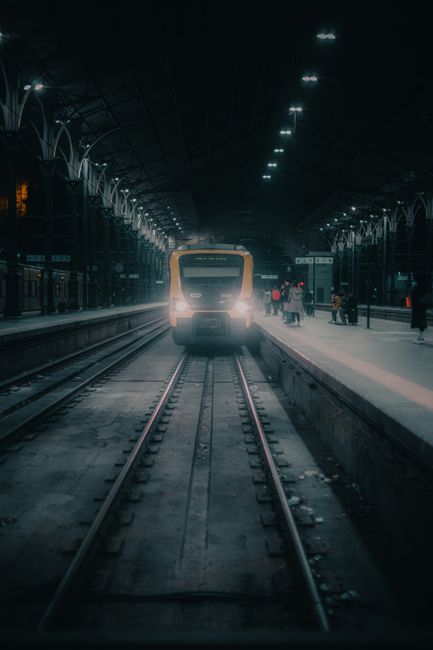
The best entry point for a day focused on Porto’s transport is the Metro do Porto. If you arrive by plane, head straight to Aeroporto station, located at Francisco Sá Carneiro Airport, 4470-558 Vila Nova da Telha. The purple line, called line E, links the airport to the city centre and is one of the simplest routes to reach Porto without a taxi. Modern trains generally run from early morning until just after midnight, with frequencies often between 20 and 30 minutes from the airport. Allow about 30–35 minutes to Trindade, the network’s main interchange.
For this trip you’ll usually need a ticket covering more zones than the centre, often a Z4 ticket, priced roughly €2.25, plus the Andante Azul card if you don’t already have one. Buy your card at the machine before entering the platform and, crucially, validate it at the yellow validator before each journey, including when changing lines. Controls are common in Porto and an unvalidated card can be treated as no valid fare.
If you’re already staying in the centre, begin at Trindade, near Rua de Camões, 4000-144 Porto. This station is especially convenient because it connects lines A, B, C, D, E and F. Its surroundings are less picturesque than the Ribeira but it’s the backbone of urban movement. Then take line D, marked in yellow, toward Santo Ovídio or Hospital São João depending on your route, for a short hop to São Bento. This underground station sits right next to the magnificent historic railway station.
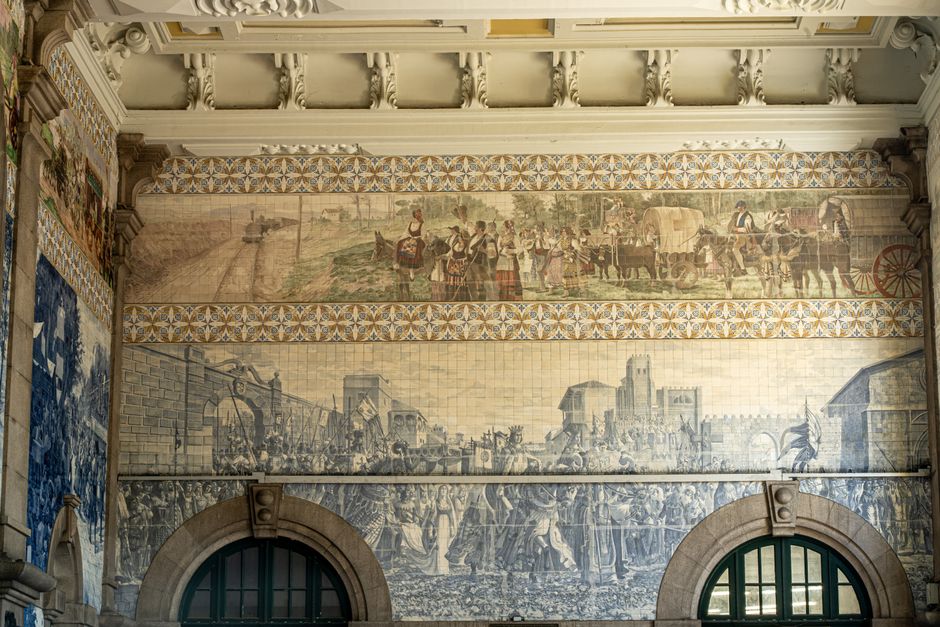
At the metro exit, go to Estação de São Bento at Praça de Almeida Garrett, 4000-069 Porto. It’s open daily for train services, usually from early morning into the evening, though access to the main hall depends on train activity. Spend at least fifteen minutes in its vestibule: more than 20,000 azulejos, created by Jorge Colaço in the early 20th century, depict battles, rural scenes, historical processions and defining moments of Portugal. The blue-and-white tiles create a theatrical, almost cinematic effect, especially when sunlight streams through the glass roof.
From São Bento, walk to Praça da Liberdade and Avenida dos Aliados in under five minutes. This grand avenue is flanked by bank buildings, hotels and stone administrative edifices. It leads to the Hotel de Ville de Porto, Praça do General Humberto Delgado, 4049-001 Porto, easily identified by its tower. For a local coffee before you go on, stop at Café Guarany, Avenida dos Aliados 85-89, 4000-066 Porto, usually open from morning until late. An espresso often costs between 1,20 € and 2,00 €, depending on service and extras.
The metro immediately shows Porto’s defining contrast: a historic city with a modern, highly functional transport network. Central stations are clean, signed in Portuguese and English, and visitor-friendly. Be aware some entrances have multiple exits onto different streets. Before surfacing, check the map on the platform to choose the exit for your direction — a small step that avoids unnecessary detours in an already steep city.
2. Descend to the Ribeira with the Funicular dos Guindais and take in the Douro
From São Bento station and Avenida dos Aliados, continue on foot toward the upper part of the historic center. The goal is to reach the Funicular dos Guindais, one of the nicest ways to link Porto’s heights to the Douro riverside. The upper station is at Rua Augusto Rosa 4000-098 Porto, near the Guindais viewpoint and a few minutes from the cathedral. The lower station sits at Cais da Estiva, 4050-199 Porto, close to the Ribeira quarter. The ride is short — around three minutes — but it compresses the city’s topography: old walls, tightly packed houses, a metal bridge, the river and passing people unfold behind the cabin windows.
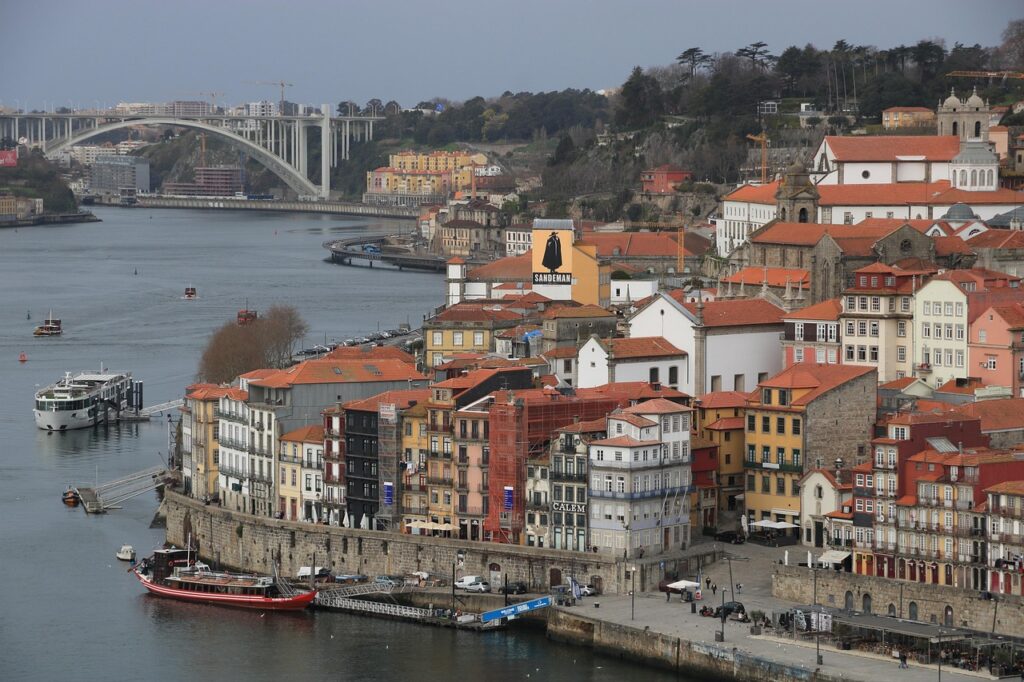
Before descending, take a detour to the Sé do Porto, also called Porto Cathedral, at Terreiro da Sé, 4050-573 Porto. The square in front offers an excellent view over the city roofs, the Douro and Vila Nova de Gaia. The cathedral is usually open daily, though hours vary with religious services and season. Access to the nave is often free; visiting the cloister and paid areas typically costs around 3,00 €, subject to change. Even if you skip the interior, the esplanade is a perfect stop to understand the layout of your descent.
The funicular normally runs daily, roughly from 8 h 00 to 20 h 00 or 22 h 00 depending on the season. In summer extended hours are common; in winter it may close earlier. A one-way adult ticket usually costs about 2,50 €, but check the official notices on site as fares can change. Discounts are sometimes available for children, students or seniors with ID. Payment is generally possible at the ticket office or the machine at the upper station.
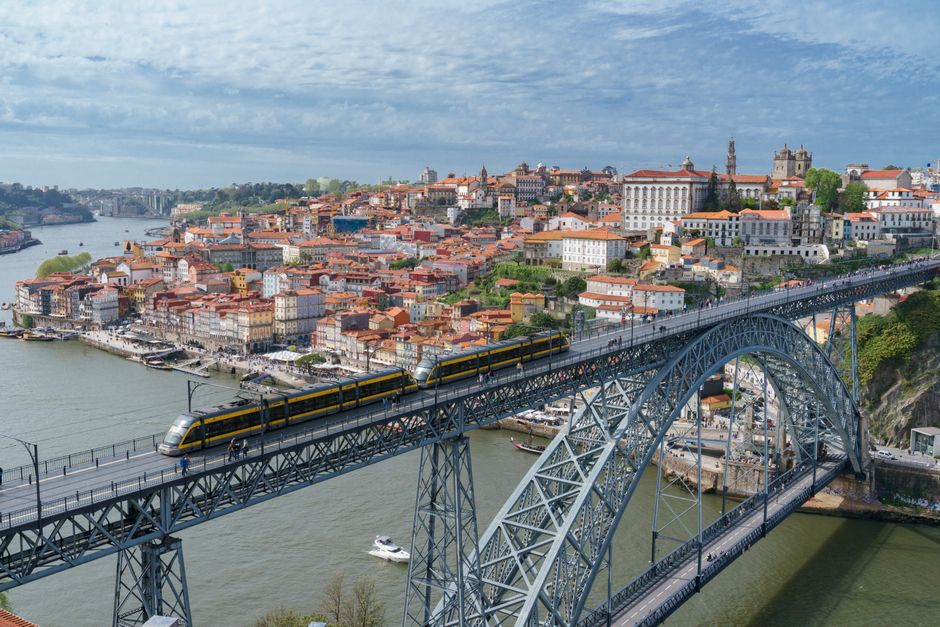
Descend slowly — it’s worth savoring. Stand by the windows facing the river if the cabin isn’t too crowded. You’ll spot the piers of the Ponte de Dom Luís I, the two-level bridge inaugurated in 1886, and the Ribeira houses’ terraces. The monument links Porto to Vila Nova de Gaia, but it also symbolizes the connection between the trading city, the port wine cellars across the river and the working-class neighborhoods on the slopes. Far from just a shortcut, the funicular physically tells the story of a city built against its terrain.
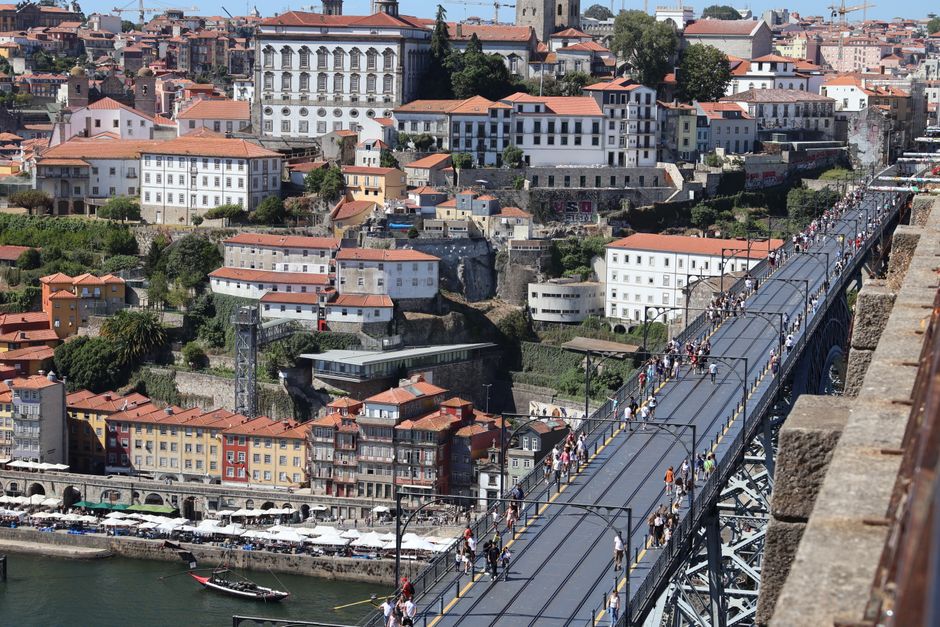
On arrival you’re instantly immersed in Cais da Ribeira, 4050-510 Porto. Narrow ochre, red, green and yellow facades line the Douro. Terraces begin to fill around noon, while rabelo boats, once used to transport wine barrels from the Douro valley, wait by the quays. For a quick, reasonably priced break, look for a table in the side streets rather than right on the waterfront, which is often pricier. A light lunch with soup, sandwich or salad commonly costs between 10,00 € and 18,00 € per person; a fuller meal with grilled fish can exceed 20,00 €.
Local tip: don’t rush to the bridge when you arrive. Spend a few minutes in the small streets behind the quay, especially around Rua da Fonte Taurina and Rua dos Mercadores. They reveal an older, denser and often quieter face of the Ribeira. Then return to the river to continue by tram. Keep your camera handy, but also watch your belongings in busy spots, especially at lunchtime and sunset.
3. Take the historic tram from the Ribeira to Foz do Douro along the river
After the funicular descent and exploring the Ribeira, it’s time for the most photogenic experience of the day: Porto’s historic tram. The most recommended line for a day visitor is line 1, operated by the Sociedade de Transportes Colectivos do Porto (STCP). It links the old town to Foz do Douro following the riverbanks. Its route usually departs from the Infante area, Infante, near Praça do Infante D. Henrique, 4050-297 Porto, and reaches Praia do Passeio Alegre in Foz, close to Jardim do Passeio Alegre, Rua do Passeio Alegre, 4150-571 Porto.
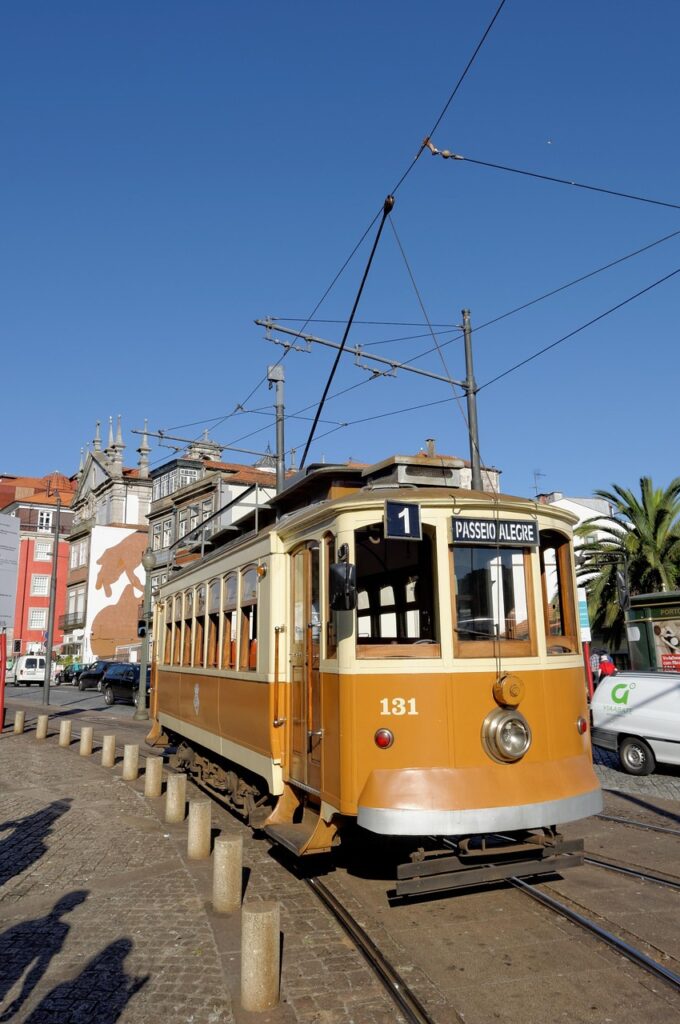
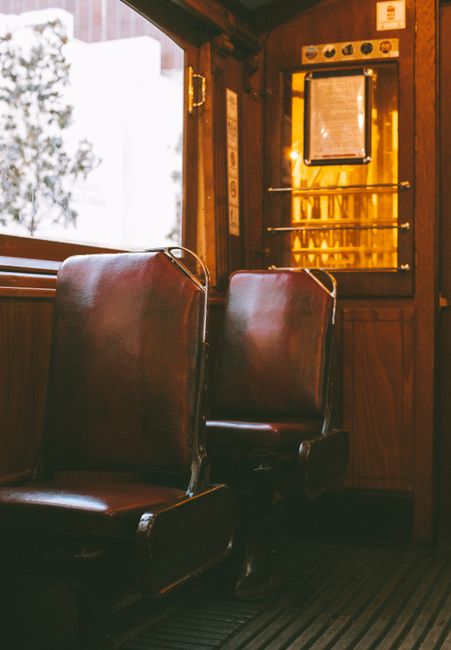
The old trams are instantly recognizable by their woodwork, traditional seats and leisurely pace. It’s not the quickest way to reach Foz, but it’s arguably the most evocative. The ride takes around 25 to 35 minutes depending on traffic and stops. Trams usually run every 20 to 30 minutes, typically between 9 h 00 and 18 h 00 or 20 h 00, depending on the season. In summer, it’s wise to start at the terminus or hop on earlier in the afternoon to avoid a long wait.
Tickets are usually bought directly from the driver or conductor on board. Expect about 6,00 € for a one-way adult fare, subject to confirmation on site. A tourist pass covering several historic lines is sometimes offered, often around 12,00 € for two days; it’s worth it only if you really plan to take multiple trips on lines 1, 18 and 22. The Andante card used on the metro is generally not valid on these heritage trams. Keep your ticket for the entire journey.
Try to sit on the window side facing the Douro if you can. The tram starts amid the dense quay area, runs past administrative buildings and old warehouses, then gradually opens up. The river widens, promenades become greener and terraces give way to pedestrian paths. Approaching Massarelos, you can spot the Museu do Carro Elétrico at Alameda Basílio Teles 51, 4150-127 Porto. This museum, dedicated to electric transport and old trams, is a perfectly fitting stop for the day. It’s often open Tuesday to Sunday, roughly 10 h 00 to 18 h 00, and tickets are usually around 8,00 €. Check seasonal hours before planning a full visit.
Continuing to Foz do Douro, the tram drops you near the ocean. Foz is a more open residential area, prized for its cafés, gardens and rocky beaches. Get off near Passeio Alegre to see the Jardim do Passeio Alegre, a public garden with palm trees, pavilions and shaded paths. Its address is Rua do Passeio Alegre, 4150-571 Porto. It’s generally free and open all day. From there, walk a few minutes to Farolim de Felgueiras at the end of Avenida de Dom Carlos I, 4150-190 Porto, where the river meets the Atlantic.
The scene is very different from the Ribeira: broader light, sea spray, waves crashing on the pier and the lighthouse silhouette. If the sea is rough, don’t venture onto the rocks or the end of the pier. Waves can surprise you even on sunny days. For a snack, Foz cafés serve pastries, ice cream and drinks. Expect roughly 2,00 € à 4,50 € for a pastry and a simple drink, more for a seaside terrace combo.
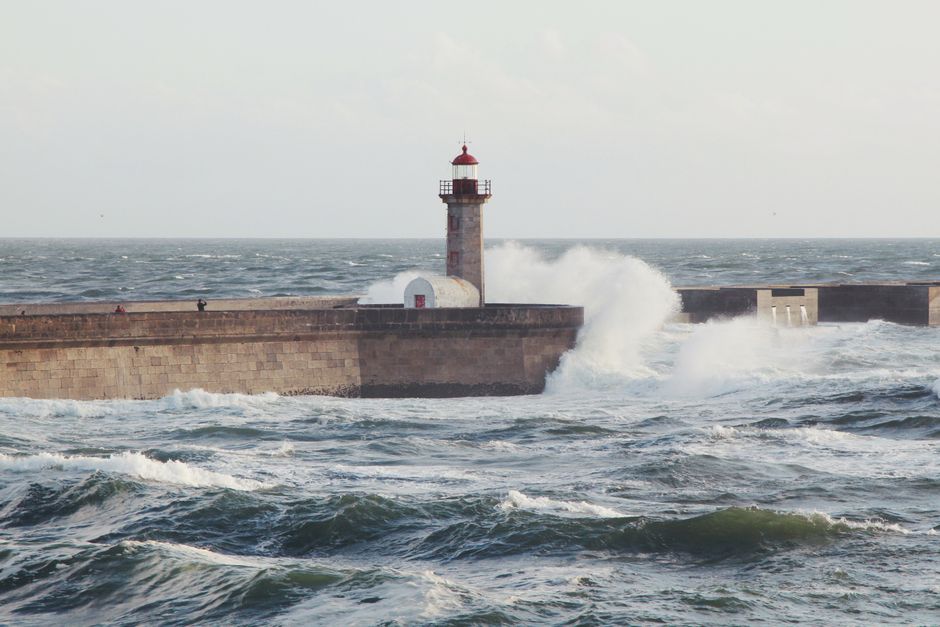
The historic tram offers a slow, tactile reading of the landscape. It doesn’t just move you from point A to B: it reveals the shift from Porto’s riverine, industrial and commercial past to its seaside side opening onto the Atlantic. That’s why it deserves a central spot in a day devoted to urban transport. Still, allow extra time for the return: vintage trams are charming but can be less regular than a modern metro, especially during crowds or incidents on single-track sections.
4. Return toward the centre and explore modern districts with the Metro do Porto
After reaching Foz do Douro, return to Porto’s heart can be by the historic tram, but the most efficient option is often a short STCP bus ride combined with the metro. Depending on your exact location, join a bus stop on Avenida do Brasil or near the Jardim do Passeio Alegre, then head to a metro station such as Casa da Música at Avenida da Boavista 604-610, 4149-071 Porto. Bus routes change regularly; use the official STCP app or Google Maps live to find the right vehicle. Andante tickets can be used on many STCP lines provided they’re loaded and validated for the required zone.
Casa da Música station is an excellent restart point for a more contemporary exploration. It serves lines A, B, C, E and F depending on connections, and generally operates from early morning until after midnight. Exit toward the Casa da Música, the famous concert hall designed by Rem Koolhaas, at Avenida da Boavista 604-610, 4149-071 Porto. Its angular white architecture contrasts with the traditional buildings of the old centre. Even without attending a concert, the exterior is worth a careful look. Guided tours are usually offered at certain times, often around 10,00 €; check the day’s program on the official site or at the information desk.
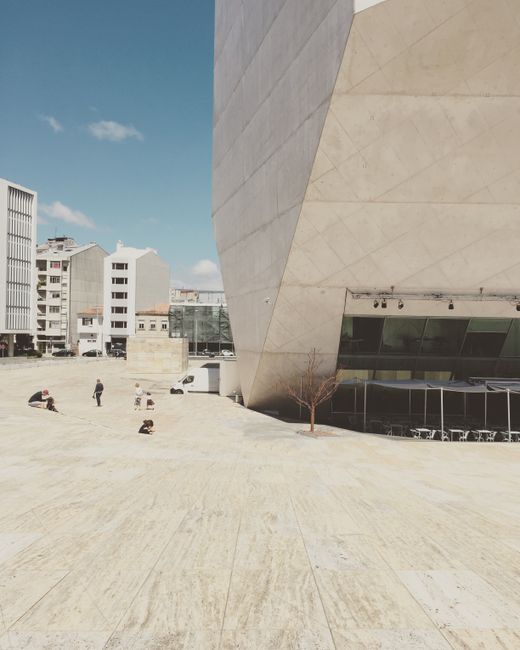
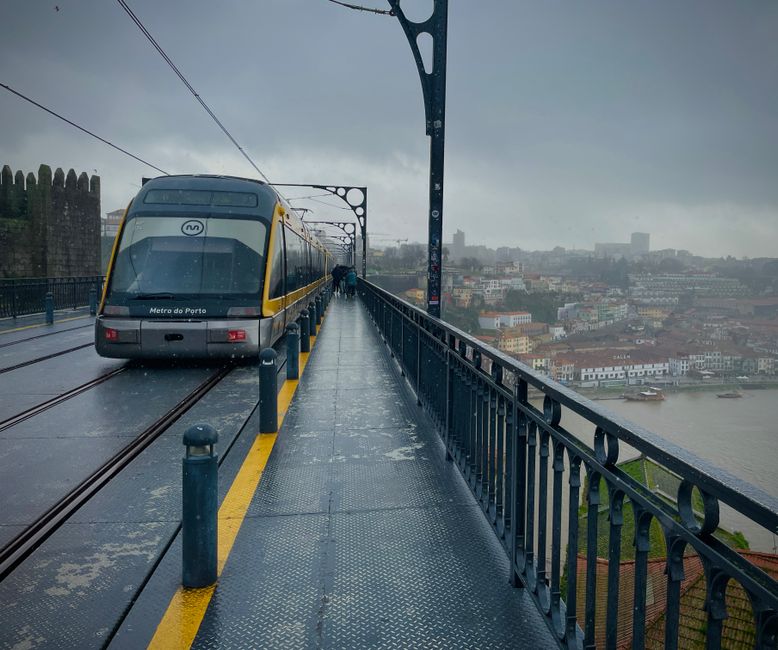
Then take the metro to Trindade, and if you still have time and energy, catch line D to Jardim do Morro at Avenida da República, 4430-188 Vila Nova de Gaia. This station sits on the other side of the Dom Luís I bridge, on the heights of Vila Nova de Gaia. The metro crossing on the bridge’s upper deck is one of the network’s great visual moments: the train glides slowly above the Douro at an impressive height while pedestrians walk beside it. Avoid blocking doors or aisles for photos; pick a window and stay mindful of passengers getting off.
At Jardim do Morro you get a straight-on panorama of Porto, especially lovely in the late afternoon. The garden itself is free and open every day. From there you can see the colorful façades of the Ribeira, the Sé bell tower, boats on the Douro and the successive bridges. If you want to visit a cellar, the big houses in Vila Nova de Gaia are an easy downhill walk. For example, the Cálem cellars are at Avenida de Diogo Leite 344, 4400-111 Vila Nova de Gaia. Tours with tastings often start around 20,00 € to 25,00 €, depending on the option, and frequently require booking in high season.
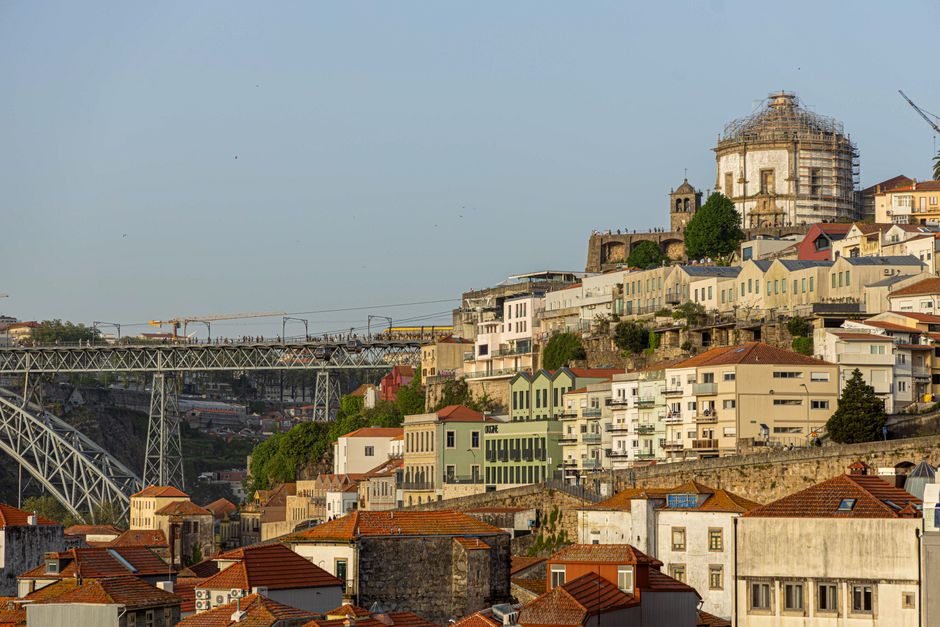
To end the day, return to Porto on line D or walk across the upper level of the Ponte de Dom Luís I to São Bento station. The metro is the more comfortable choice if you’re tired. In the evening the buzz concentrates around Rua das Flores, Rua de Mouzinho da Silveira, Galerias de Paris and Rua de Cândido dos Reis. For a Portuguese dinner in the centre, budget roughly 18,00 € to 35,00 € per person excluding drinks, depending on the restaurant.
The strength of Metro do Porto becomes clear at this stage: after the deliberate pace of the tram and the spectacle of the funicular, it brings speed back to your day. The trains are a reliable way to cover distances between Foz, Boavista, Trindade, Gaia and the main districts. If you’re staying near the airport or in outer zones, always check how many zones you need before topping up your Andante card. A Z2 pass is great for the centre but won’t cover the airport or some longer trips.
Conclusion: a day of transport that turns into a true tour of Porto
Discovering Porto’s metro, tram and funicular in one day is more than a logistical exercise. It’s a smart way to get into the city’s character. The metro reveals a modern, connected, pragmatic Porto that’s remarkably efficient for a destination whose hills could deter visitors. The Guindais funicular turns a potentially tiring descent into a short panoramic ride, linking the cathedral heights to the lively Ribeira quays. Finally, the historic tram line 1 offers a slow, noisy, nostalgic trip along the Douro out to the maritime views of Foz do Douro.
This day works particularly well if you accept not trying to see everything. Porto rewards slowness: the click of the tram wheels on the rails, the shadow of the houses on the Ribeira slopes, the changing light on the Dom Luís I bridge and the Atlantic breeze at Foz are moments that deserve time. Keep a structured but flexible itinerary. If the tram is too crowded, enjoy a coffee by the river. If the funicular is temporarily out of service, walk down the alleys at your own pace. If the metro seems confusing, ask for help: staff and many locals are used to tourists.
Practically speaking, allow about 15,00 € to 25,00 € for transport for a full day depending on your choices, not including optional visits, occasional buses or airport tickets. Buy your Andante card in the morning, always validate before each trip and carry some cash or a bank card for the historic tram and the funicular. Also check schedules on the day, especially off-season, public holidays and during works.
Following this route you’ll have linked the azulejos of Estação de São Bento, the slopes of the Sé, the quays of Cais da Ribeira, the Douro banks, the waves of Foz, the architecture of Casa da Música and the heights of Jardim do Morro. Few European cities offer such a variety of urban landscapes within such an accessible transport network. Porto is best discovered not despite its climbs but thanks to the vehicles that climb, run alongside or overlook them.